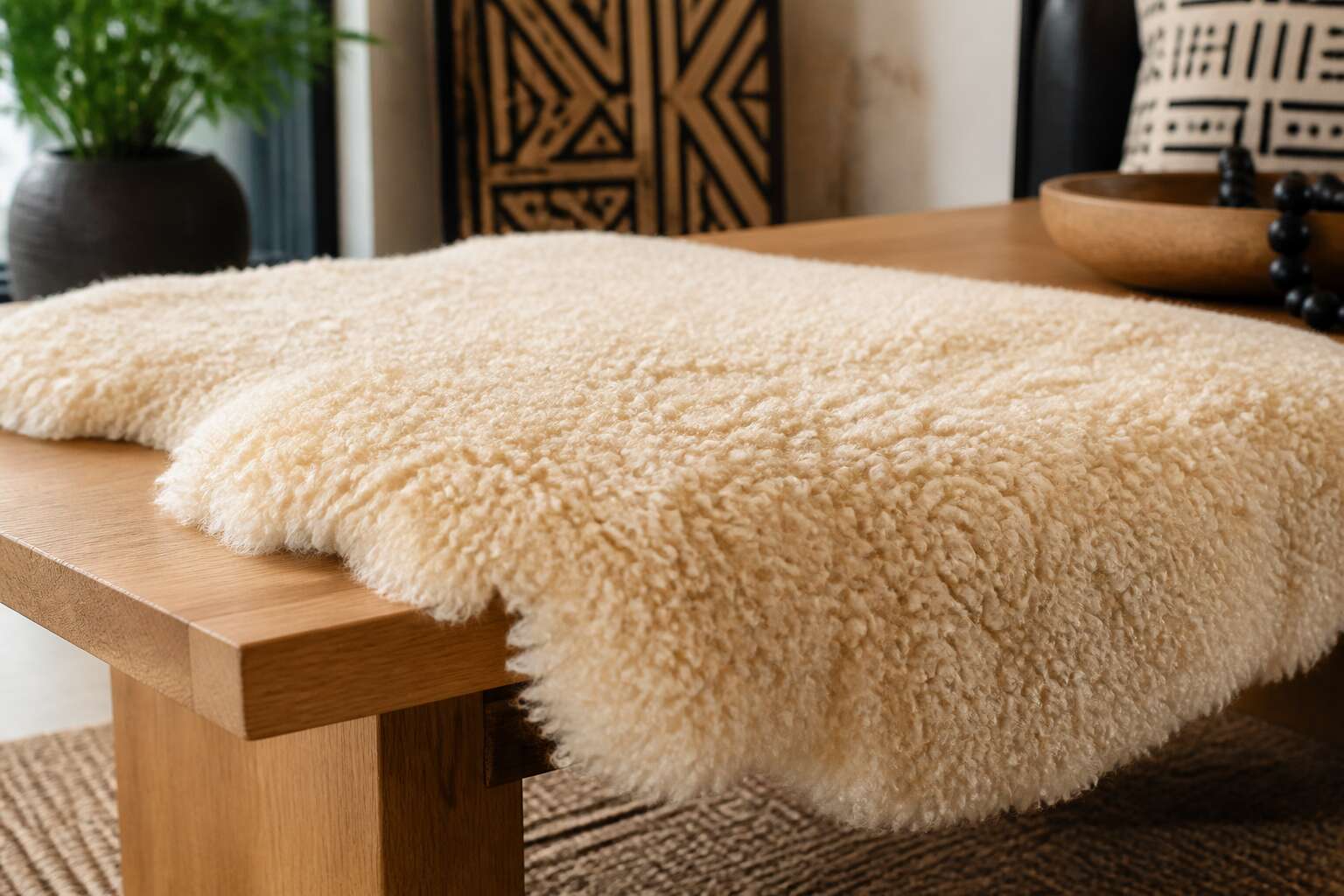
The Appeal of Short Wool Sheepskin
Why Choose Short Wool Over Long Wool?
Sheepskin’s reputation rests on deep, flowing fleece. Yet the short wool sheepskin pelt Pretoria market prizes a more refined cut. Trimmed to roughly 25 millimetres, short wool keeps the supple, temperature-regulating character of the hide while removing the shaggy bulk. It suits a busy city lifestyle where rugs, car seat covers, and chair liners must look tailored and stay practical.
Long wool may feel indulgent, but it mats quickly under weight and traps dust. Short wool’s dense, upright pile springs back from foot traffic and cleans easily with a soft brush.
- Resists crushing from furniture legs
- Retains colour despite strong sunlight
- Sits neatly on contemporary seating
Designers across Gauteng choose this shorter nap for its versatility. It drapes without bulk over armchairs and holds firmly on stair treads. The result is a hide that behaves as beautifully as it looks.
The Unique Texture and Durability
Run your hand across a short wool sheepskin pelt Pretoria and you will feel something unexpected. The pile is dense and firm under the palm, yet soft against the fingers. It resists firmly, then yields gently with pressure. That is the appeal!
This unique texture comes from the 25 millimetre cut. The wool keeps its natural curl and upright position. I have tested these hides in working homes with children and heavy furniture. The fibres press down under weight, then recover their shape quickly.
- The blunt fibre ends create a firm, even nap
- Neck and saddle sections are noticeably denser
- Belly sections remain flexible for curved surfaces
Durability also depends on the leather backing. Tanners split the hide to an even thickness, which prevents stretching and tearing. That is why a short wool sheepskin pelt Pretoria holds up for years on a dining chair or entryway bench.
Climate Suitability for Pretoria Homes
Pretoria’s highveld climate swings between extremes. Summer afternoons climb past thirty degrees, while winter nights hover near freezing. A short wool sheepskin pelt Pretoria handles both without complaint.
The 25 millimetre pile allows air to circulate freely, so it never traps the day’s heat. When temperatures drop, the same pelt holds warmth against the body. This natural thermoregulation is why a short wool sheepskin pelt Pretoria works in rooms with large windows and tiled floors, common in older homes.
Watch how the pelt responds across seasons:
- It stays cool against bare legs in summer.
- It insulates when evening chill arrives.
- It remains steady through sudden temperature shifts.
Applications and Styling Ideas
Living Room Accents
In the dim hours of a Pretoria evening, the living room settles into deeper shadow. The short wool sheepskin pelt Pretoria offers drapes over a reading chair and turns that corner into a quiet place to sit. The pile catches lamplight at odd angles, keeping bare feet off the cold of tiled floors.
Consider these placements:
- On the arm of a worn leather sofa, it interrupts the expanse of brown.
- At the base of a side table, it softens the sound of bare feet on stone.
- Across the footrest of a window seat, it offers a warm seat during winter storms.
Each placement alters the room’s character. The pelt does not dominate; it adds a low level of comfort to the space. For interiors that favour restraint with a hint of the natural world, this single addition provides the needed softness.
Bedroom Comfort and Luxury
Bedroom comfort in Pretoria depends on how you manage the temperature swing, and I’ve learned this the hard way. A short wool sheepskin pelt Pretoria solves it quietly. Tucked at the foot of the bed, it warms cold feet without trapping body heat. Draped over a bedside chair, it softens the 5am stumble across cold tiles.
- Fold it over the headboard for a soft backrest while reading.
- Use it as a mattress topper for a single night of indulgence.
For luxury, layer it over your duvet. The short wool resists shedding and matting, even with daily use. It gives crisp cotton sheets a tactile contrast that elevates the whole bed.
Automotive and Travel Uses
The N1 to the Cape runs long and straight, and at dawn the passenger seat retains the night’s chill. A short wool sheepskin pelt Pretoria drivers rely on sits folded in my boot. It absorbs that cold, releases it slowly, and grips the upholstery through sharp corners without sliding.
The pelt travels beyond the car. Spread on a picnic table at a rest stop, it provides a clean surface on gravel. Folded inside a suitcase, it cushions a camera or a bottle of wine on a bumpy road.
- Over a camping chair on a cold Highveld evening.
- Under a child’s car seat for long trips to the bush.
- Across a train seat for the overnight journey to Durban.
Short wool compresses without creasing and shakes out clean after a dusty Karoo stop. It dries quickly, too!
Baby and Kids’ Furniture
Children’s furniture takes a daily beating. The short wool sheepskin pelt Pretoria families pick for their nurseries stays cool in summer and warm in winter. Draped over a wooden rocking chair, it softens midnight feeds for parent and infant alike.
For toddlers, the pelt cushions a bed’s edge or a play table base. Spilled juice wipes off. The wool’s natural lanolin repels dust mites, a relief for sensitive skin.
- Inside a cot for tummy time, it supports developing necks and backs.
- Over a kids’ sofa arm, it absorbs crumbs and marker stains.
- Beneath a homework chair, it protects wooden floors and warms small feet.
My upholstered nursing ottoman stays pristine because a short wool sheepskin pelt Pretoria supplier advised weekly rotation. The wool breathes, preventing dampness under restless toddlers. Wash gently and hang over the cot rail to dry.
A Shopper’s Guide in Pretoria
Where to Buy Authentic Sheepskin in Pretoria
Finding a genuine short wool sheepskin pelt Pretoria offers is harder than it appears. The city’s markets hide treasures beneath harsh fluorescent lights, yet counterfeit hides lurk beside them. Authentic pelts carry a dense, yielding nap and a suede backing that smells of earth, not chemicals. Skin tends to feel supple rather than papery.
Trusted avenues worth your attention include:
– Brooklyn Design District specialists
– Faerie Glen flea market stalls
– Leather merchants near Church Street
A short wool sheepskin pelt Pretoria shoppers prize will feel cool to the touch and warm beneath the hand. Shedding fibres or a stiff backing signal a lesser product. The genuine article holds a quiet weight, a remnant of the animal’s life. Seek out that weight. It rarely lies.
Understanding Quality Grades and Pricing
The gap between a R400 pelt and a R1,200 pelt is not ornament. It is grading. Dealers in Pretoria sort hides by fibre depth, backing integrity, and wool bed density. A short wool sheepskin pelt Pretoria vendors grade as ‘premium’ carries a uniform 20 to 30 millimetre nap. ‘Commercial’ grade may show thin patches or a stitched repair.
Price follows provenance. Local Karoo pelts command higher sums than imported stock. Ask for the tannery name and the processing date. A reputable seller offers both without hesitation!
Some markers of higher grades:
- Wool that springs back after a firm squeeze
- Backing that bends without cracking
- A faint lanolin scent rather than chemical odour
A short wool sheepskin pelt Pretoria shopper choosing wisely pays for measurement, not guesswork.
Comparing Local vs Imported Pelts
Roughly sixty percent of the hides traded on Pretoria’s market floors land here from foreign tanneries. That should give any buyer pause. The difference between a local Karoo pelt and an imported one is a matter of origin and handling.
Local pelts travel shorter distances, meaning less crushed wool and fewer stress marks. Imported stock often arrives with chemical treatments used to prevent deterioration during shipping. A short wool sheepskin pelt Pretoria shopper can test this by rubbing the wool between fingers. Foreign pelts may feel slick, while local hides tend to feel dry and clean.
Consider these comparisons:
- Local pelts usually carry a visible tannery stamp; imported ones arrive blank.
- Karoo wool has a denser crimp and holds shape better under pressure.
- Imported pelts are thinner at the edges, a sign of over-trimming.
The short wool sheepskin pelt Pretoria buyer who learns to spot origin gets the better transaction.
Ethical Sourcing and Sustainability
Seventy percent of the world’s sheepskin now passes through global processing channels, yet few Pretoria shoppers pause to ask what that journey costs the environment. Ethical sourcing in this city requires a sharper eye, one that looks beyond the plush surface to the trail of chemicals and carbon left behind.
The short wool sheepskin pelt Pretoria market has responded to this scrutiny. Several local tanneries now operate closed-loop water systems, reducing effluent discharge dramatically. They also use chromium-free tanning methods, a significant shift from industry norms. What does this mean for the buyer on the floor?
– Ask the supplier about their finishing agents. Vegetable-based oils are the responsible choice.
– Look for natural, undyed wool. The colour should be creamy or caramel, not stark white, which indicates bleaching.
– Examine the leather backing. It should be supple, not stiff from heavy resin treatments.
Sustainable pelts are a smaller investment in the long run. They age gracefully when maintained properly, and when they finally wear out, they return to the earth. Imported stock, laden with preservatives, ends up in landfill. That is the true cost of convenience. The discerning Pretoria shopper who cares about provenance now finds that sustainability and quality walk the same path. The short wool sheepskin pelt Pretoria buyer who asks the right questions secures a product that is kind to both home and habitat.
Custom Sizing and Leather Backing Options
Pretoria shoppers often overlook how custom sizing changes the character of a short wool sheepskin pelt. A bespoke cut fits your furniture, but it alters the leather backing’s stress points. Trimmed edges require binding. Unbound edges on a short wool sheepskin pelt Pretoria supplier can curl, creating an uneven seat.
Leather backing quality determines longevity. Look for full, unbroken hide. Suede-like finishes indicate a softer pelt. Glossy or painted backings often mask split leather. A roughened backing holds stitching better than a smooth one.
Consider these backing options:
- Natural suede: flexible, conforms to shape.
- Finished leather: resists moisture, easier to clean.
- Textured splits: economical, but may shed fibers.
Custom sizing affects drape. A short wool sheepskin pelt Pretoria homeowner might want a tailored fit, but too tight a cut restricts wool movement. Allow extra allowance if you plan to fold edges. Measure twice, then consult a craftsperson about the hide’s stretch.
Caring for Your Sheepskin Pelt
Regular Cleaning and Brushing Tips
Most people ruin a good sheepskin in one careless wash. Your short wool sheepskin pelt Pretoria deserves a gentler fate. I always recommend hand washing with a mild detergent and cool water, then squeezing out the excess without twisting. The wool stays springy and the leather remains soft.
For regular care, brushing matters more than cleaning. A soft-bristled brush lifts dust and revives the pile, keeping the surface fresh. Brush in the direction of the wool fibres twice a month. When spills happen, blot immediately with a damp cloth. Air dry the pelt away from direct heat or sunlight, and it will last for years!
Stain Removal and Spot Treatment
One careless spill can undo months of careful upkeep. The short wool sheepskin pelt Pretoria residents buy deserves a precise response when accidents happen. Act quickly, because fresh stains lift far easier than dried ones. Begin by blotting the area with a dry cloth to absorb excess liquid. Never scrub, as friction drives particles deeper into the wool.
Prepare a solution of cool water and a few drops of gentle detergent. Dip a soft cloth into the mixture, wring it out, and dab the stained fibres lightly. Work from the outside of the stain toward the centre to prevent spreading. Follow with a clean, damp cloth to remove soap residue.
For dried or stubborn stains:
- Let a specialised sheepskin cleaner sit for a few minutes before blotting.
- Rinse thoroughly with a damp cloth until no residue remains.
- Air dry completely, then brush the area to lift the wool.
It is remarkable how much damage a gentle hand prevents!
Storage Practices for Longevity
Storage is where sheepskin dreams go to die, or in this case, not. A short wool sheepskin pelt Pretoria owners treat with respect will outlast the trends that tried to replace it. The enemy is moisture, heat, and light, the unholy trinity of textile decay.
Here is the method:
1. Never fold it. Folding creates permanent creases that mock you every time you look at them.
2. Roll it, wool side in, leather side out, around a padded cylinder.
3. Place it in a breathable cotton bag. Plastic suffocates the leather and invites mildew.
Keep the bundle in a cool, dark space. A cupboard works. A garage does not. Humidity is the silent assassin. If you must hang a short wool sheepskin pelt Pretoria customers cherish, use a wide, padded hanger. Never wire.
One more thing: moths love sheepskin. This is not a metaphor. A cedar block in the storage area settles that argument.
The Investment Value of Sheepskin
Cost vs. Longevity
A genuine short wool sheepskin pelt Pretoria residents purchase often costs less than a high-end synthetic throw, yet offers decades of service. When you divide the initial expense by years of daily use, the annual cost becomes remarkably low. This is a mathematical reality, not just a marketing claim. A well maintained pelt can outlast several cheaper alternatives, which lose their pile and shape within a season or two.
Synthetic fibres degrade, flatten, and pill, forcing replacement purchases every few years. Genuine wool, however, resists compression and recovers its loft naturally. I have seen pelts that survived fifteen winters and still felt plush. This longevity transforms a simple home furnishing into a long term asset, one that also provides insulation during cold Pretoria evenings and remains breathable when temperatures rise.
A short wool sheepskin pelt Pretoria buyers choose for its resilience does not require expensive specialist care. Regular shaking and airing keeps it fresh. This low maintenance factor adds to the financial sense of the purchase, making the upfront price a wise allocation of resources.
Seasonal Versatility
Winter mornings in Pretoria bite, yet by midday the sun reclaims its territory. One short wool sheepskin pelt Pretoria residents place on a reading chair performs double duty. It traps warmth when you need it, then releases heat as the day warms. This chameleon quality turns a single purchase into year round comfort. Consider how the pelt serves you:
- In June, it cushions cold floors.
- In September, it adds a soft barrier against lingering chill.
- In December, its breathable fibres prevent overheating.
I have watched my own pelt transition through four seasons without losing its shape. That versatility justifies the expense. You are buying warmth in winter and coolness in summer, all from one surface. The short wool sheepskin pelt Pretoria shoppers choose adapts without effort, making it a smart investment for any household.
Home Resale Appeal
When the time comes to sell your home, styling details influence buyer perception. A short wool sheepskin pelt Pretoria homeowners place on an entryway bench signals quality and care. I have watched buyers run their hands over it before even glancing at the kitchen.
Consider what that pelt does during a showing:
- It softens hard surfaces like tiled floors and wooden benches.
- It absorbs sound in echo-prone rooms.
- It gives buyers a tactile reason to pause.
The pelt itself holds resale value. A stain-free, odourless hide sells on second hand platforms for about half its original price. That return matters when you view furnishings as assets rather than expenses.
Eco-Friendly Aspects
Every synthetic throw sold today will shed microplastics for centuries. A short wool sheepskin pelt Pretoria families choose instead follows a different lifecycle, one that loops from pasture to soil. The difference becomes visible in the long term.
Wool is a biogenic fibre, grown annually without petrochemical inputs. The hide is a byproduct of the meat industry, so no animal is raised solely for the pelt. Responsible tanneries use plant based agents. In my experience, these pelts demand nothing: no washing, no chemical refreshers, no electricity to keep their structure intact!
For a short wool sheepskin pelt Pretoria buyer, the ecological markers are measurable:
- The pelt degrades fully when its working life ends
- Its production repurposes an existing waste stream
- Its care routine consumes zero water and zero detergent
These factors operate as a silent return on investment. The pelt costs more upfront, but it does not accrue environmental debt.
Supporting Local Pretoria Businesses
The true value of a short wool sheepskin pelt Pretoria purchase shows up in the local ledger. A Rand spent with a local supplier circulates through Pretoria’s economy, paying wages and keeping small tanneries operational. Imported alternatives send that money abroad and leave no trace behind.
Local suppliers operate differently. They inspect each pelt before it reaches the shelf. They offer honest grading because their reputation depends on the neighbourhood, not a distant warehouse. In my experience, they answer their own phones when a problem surfaces. They also carry the practical details:
– They stock short wool sheepskin pelt Pretoria options suited to the Highveld climate
– They can match hides by hand and advise on leather backing
– They stand behind the product long after the sale
That accountability transforms a simple purchase into an investment. The pelt performs for years, and the community retains the value. Both returns compound quietly, season after season.


0 Comments