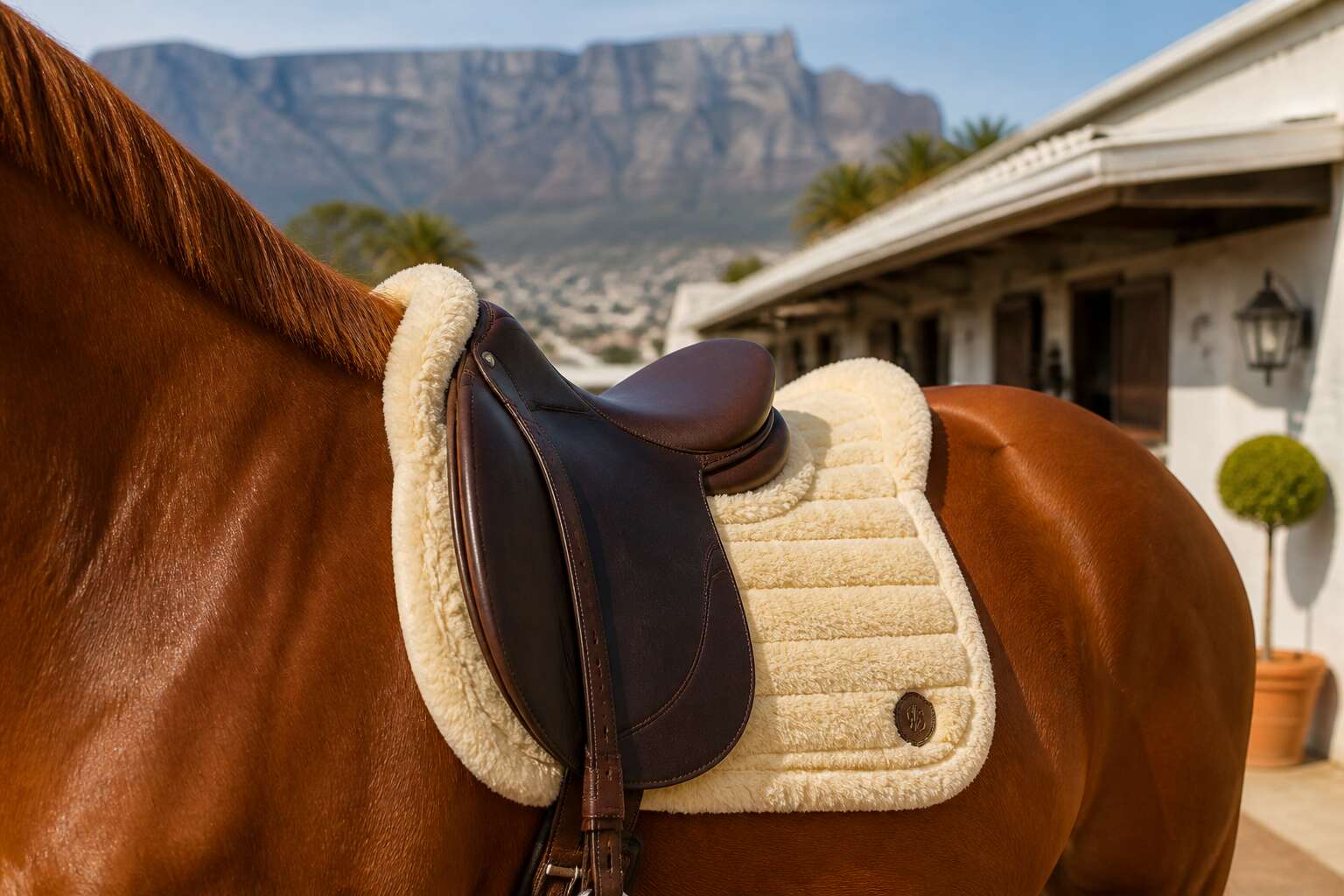
Understanding Sheepskin Numnahs
What Exactly is a Numnah and How Does It Work?
Pressure points on a horse’s back are invisible until the damage appears. A numnah exists to stop that damage before it starts. This pad sits between the saddle and the horse’s skin, absorbing shock and spreading the rider’s weight across a wider surface.
The sheepskin version adds a layer of wool that changes how the pad functions:
- Wool fibres trap air, creating a cushion that returns to shape after each stride.
- Moisture gets drawn away from the horse’s skin, reducing sweat build-up.
- The natural lanolin in sheepskin soothes irritated areas.
For riders looking for a sheepskin numnah Cape Town suppliers stock, the difference shows up on long trails. The wool compresses under pressure but springs back, keeping airflow constant. That is the whole mechanism. Wool cushions, wicks, and recovers.
The Unique Benefits of Sheepskin Over Synthetic Pads
Synthetic pads mimic the appearance of sheepskin, but they cannot replicate its behaviour under pressure. A sheepskin numnah Cape Town riders trust uses hollow wool fibres that compress under the saddle and spring back over thousands of strides. Synthetic foams crush over time, leaving permanent flat spots that no longer absorb shock. The difference becomes audible in the horse’s stride.
Wool also manages moisture through capillary action, pulling sweat away from the skin. Synthetic materials trap heat and dampness, which leads to rubbing and discomfort. Natural lanolin in the wool conditions the skin and soothes irritation. In my experience, riders notice this most on long trail rides.
Consider what happens to a synthetic pad over a season:
1. The foam loses its resilience and forms compacted areas.
2. The surface becomes stiff and less breathable.
3. Moisture accumulates against the horse’s back.
A quality sheepskin numnah Cape Town suppliers stock keeps its loft for years with proper care. That durability explains why many riders switch.
Key Factors in Sheepskin Quality: Density, Tanning, and Backing
Density tells you more about a sheepskin numnah Cape Town than any label. High density means more wool fibres per square centimeter, which translates to better shock absorption and longer loft. I have seen cheap numnahs with sparse wool that flatten within weeks. Tanning matters just as much. A mineral salt tan preserves the hide without stiffening it, while inferior chrome tanning leaves a harsh finish that cracks. The backing is often overlooked!
When you inspect a sheepskin numnah Cape Town, check these three points:
- Press the wool to feel its spring; dense wool returns quickly.
- Rub the underside to confirm the leather is soft, not cardboard-like.
- Lift the backing to see if it allows airflow or traps moisture.
That backing detail is crucial. Thick, glued foam backings trap heat and break down, while a woven cotton or breathable mesh keeps the pad stable and dry.
Different Types of Sheepskin Used for Equestrian Gear
Different breeds produce different wool characteristics. Merino sheepskin, with its fine crimp, offers a plush feel that many riders prize. Crossbred wool, longer and more resilient, suits horses that work hard in hot conditions. Highland sheepskin brings a coarser texture, yet it stands up to years of use. The origin of the hide also shapes performance. South African sheepskins, for instance, adapt to a warmer climate, while New Zealand wool carries a denser undercoat. When you choose a sheepskin numnah Cape Town, consider the breed behind the wool. Common types include:
- Merino: soft, fine, ideal for sensitive backs.
- Crossbred: durable, breathable, good for daily training.
- Highland: tough, long-staple, for heavy workloads.
Each type changes how the pad sits, breathes, and lasts. In my experience, the right one depends on your horse’s needs, not the label!
Common Myths and Misconceptions About Sheepskin Numnahs
Many riders assume a sheepskin numnah Cape Town will cook their horse in the summer sun. The wool actually regulates temperature through its crimp and air pockets. Heat gets trapped only when the pad is crushed or wet. Another myth is that washing ruins the hide. In fact, a proper pH-balanced wash keeps the wool resilient. What ruins a numnah is detergent residue, not water.
There are several misconceptions worth unpacking:
- Thicker wool means more cushioning: density and backing matter more.
- One wash per season is enough: sweat and dirt degrade wool if left.
- Synthetic pads offer equal breathability: wool wicks moisture actively.
A sheepskin numnah Cape Town fails only when the rider treats it like a synthetic pad. The wool works with the horse’s skin, not against it. Respect the material and it will outlast your expectations.
Why Cape Town is a Hub for Sheepskin Products
Local Sheep Farming and Premium Wool Sourcing
Half of South Africa’s wool exports pass through Cape Town’s port, yet most riders never connect their horse’s comfort to this maritime trade route. The city sits at the center of a supply chain that runs from Karoo farms to premium wool processors, and that proximity matters when you shop for a sheepskin numnah Cape Town.
Local farmers raise Merino flocks in the dry inland regions, where the climate produces dense, resilient fleece. The best tanneries operate nearby, so raw material skips the long shipping delays that inflate prices elsewhere. Your horse won’t grasp the logistics of export-grade wool, but your wallet will.
When you buy locally:
– Wool is traced to specific farms.
– Tanning follows South African standards.
This regional pipeline gives riders direct access to quality that international brands often struggle to match, at prices that reflect fewer middlemen.
Cape Town’s Climate and Its Impact on Sheepskin Quality
Cape Town’s unique position as a hub isn’t accidental. Its Mediterranean climate, with 3,000 hours of sunshine annually and low humidity, creates an ideal environment for curing sheepskin. The dry air slows decomposition and preserves the natural lanolin, which keeps the wool resilient for years.
The city’s proximity to the port and specialized processors means raw fleece moves quickly from farm to tannery. This reduces exposure to moisture, a common cause of hide deterioration.
- Consistent airflow from coastal breezes limits fungal growth.
- Cool nights slow chemical breakdown in the leather.
When you invest in a sheepskin numnah Cape Town, you benefit from climate conditions that international tanneries cannot replicate. The result is a pad that maintains its loft and shock absorption through hundreds of rides.
The City’s Equestrian Culture and Growing Demand
As the sun spills over Table Mountain, the sound of hooves on granite trails becomes as familiar as the morning gulls. Cape Town does not simply host equestrian enthusiasts; it breeds them. The city bowl to the Winelands is dotted with riding schools, private stables, and endurance riders who treat the mountain paths as their personal arena.
This deep-rooted riding culture fuels a sophisticated demand for gear that performs, not just looks polished. Local riders face diverse conditions, from dewy morning paddocks to dusty summer trails. They require equipment that adapts instantly. This pressure creates a feedback loop between riders and local artisans, refining the production of a sheepskin numnah Cape Town buyers trust.
- Trail riders demanding long-distance comfort
- Polo players needing precise, non-slip fit
- Eventing competitors seeking consistent shock absorption
- Livery yards prioritizing easy maintenance
Because the demand is local, the quality control is strict. A manufacturer cannot hide defects when the client rides the same trails on the weekend. This proximity transforms Cape Town into more than a production point; it is a living laboratory where equestrian culture directly shapes the product. The reputation of a sheepskin numnah Cape Town relies on this constant, practical feedback.
Renowned Local Tanners and Artisans
Cape Town hosts roughly a dozen dedicated sheepskin tanneries, each with a waiting list stretching into months. That backlog exists because the tanners treat raw wool with an almost forensic obsession, a precision that mass production simply cannot replicate. These artisans use time-honoured vegetable tanning and inspect each fleece for subtle density variations, a skill machines still botch.
This craftsmanship allows precise adjustments. A tanner can modify a pad’s thickness to accommodate a high-withered Thoroughbred, a broad-backed Boerperd, or a tricky saddle fit. Local knowledge drives the requests for a sheepskin numnah Cape Town. They offer services that go beyond simple stuffing:
- Hand-stitched wool binding that won’t unravel
- Custom shaving to reduce wither pressure
- Re-tanning of worn edges for longevity
The real luxury rests on this scrutiny, and the willingness to re-shape a pad until pressure points vanish. Local riders expect nothing less from a sheepskin numnah Cape Town.
How to Choose the Perfect Sheepskin Numnah
Sizing and Fit: Getting the Right Shape for Your Saddle
Choosing the correct sheepskin numnah Cape Town riders need starts with tracing the saddle’s bearing surface. Place the pad on your saddle and feel for gaps. A common mistake is buying a generic size. The numnah must follow the contour of the panels, covering them cleanly. Check the wither clearance carefully.
- Trace the saddle outline onto cardboard.
- Lay the trace over the numnah to check edge alignment.
- Ensure the spine channel clears the horse’s vertebrae.
The shape of your saddle’s tree dictates the required cut. A forward-cut saddle needs a different profile than a general purpose model. When you test the fit, run your hand along the edges. A seamless fit means the wool compresses evenly. The sheepskin numnah Cape Town equestrians choose works in unison with your horse’s movement when the edges align perfectly.
Wool Density and Thickness: What Works Best?
When you run your fingers through a sheepskin numnah Cape Town, the pile depth tells you more than any label. Dense, short wool around 15mm offers stability for close-contact work. A thicker 25mm pile provides deeper cushioning for long trail rides. The right choice depends on your discipline.
Density matters because compressed wool loses its spring. You want a pad where the fibres stand upright and bounce back after pressure. Thickness alone misleads. A flimsy backing with lofty wool flattens within weeks. Look for a tight, even curl that resists matting.
Here is what I check when evaluating wool:
– The rebound after pressing your palm into the pile
– The uniformity of thickness across the entire panel area
– The weight, as premium sheepskin feels notably heavier
A sheepskin numnah Cape Town rider depends on must match the saddle and the horse’s back. The best thickness suits your needs, not the thickest option on the shelf.
Color, Style, and Customization Options
Color sometimes feels like a secondary concern, but the right shade hides the muck of a wet Cape winter. A sheepskin numnah Cape Town rider chooses a palette that complements the horse’s coat and the saddle leather. Navy and black read formal. Tan and cream make the saddle look lighter. White shows every bit of dirt, a prompt to wash it.
Style matters too. A contoured numnah with a cut-back front fits a close-contact saddle, while a draught pad shape offers more coverage. The binding is the part people skip: leather lasts but needs care, whereas synthetic edges wipe clean.
For a sheepskin numnah Cape Town owner who wants a personal touch, options include:
- Initials stitched on the binding
- Matching girth covers
- Contrast piping along the edge
These details make your tack feel deliberate. Choose function first, then let color reflect the quiet partnership you have with your horse.
Budgeting for Quality: Price Ranges and Value for Money
Price tags rarely reflect what a sheepskin numnah costs over time. In Cape Town, where the southeaster dries wool and winter damp tests every seam, a cheap pad becomes a recurring expense. A decent sheepskin numnah Cape Town sits between R1,200 and R2,800. Below that, you are often paying for split hides or bonded wool that compacts within a season.
Value depends on riding frequency. A weekend trail rider might stretch a mid-range pad for years. A daily livery rider needs dense wool and leather backing that survives repeated use. In my experience, the price tiers break down like this:
- Entry level, R800 to R1,200, suits light riding but demands meticulous drying.
- Mid range, R1,400 to R2,000, balances wool density with durable stitching.
- Premium, above R2,200, uses full hide, chrome tanning, and reinforced binding.
Those who ride hard and fit their saddles well find that a premium sheepskin numnah Cape Town purchase outlasts three cheap replacements, making the higher outlay the economical choice over time.
Testing and Evaluating a Numnah Before Purchase
Run your palm across the wool and it should spring back immediately. If fibres linger flat, the hide beneath has already lost resilience. This matters in Cape Town, where the southeaster draws moisture from exposed wool within hours.
Before buying a sheepskin numnah Cape Town, test it with a few deliberate actions:
1. Fold the numnah in half. The backing should flex without cracking.
2. Press wool near the binding. Dense fibres resist compression; sparse areas reveal a thinner hide.
3. Turn it over and inspect the leather. Even colour and tight grain indicate proper chrome tanning.
4. Check the hem. Double stitching survives saddle fitting friction far better than a single thread.
Then test the fit against your actual saddle. Most tack shops selling a sheepskin numnah Cape Town allow you to bring your saddle in to check panel contact and wither clearance.
Care and Maintenance Tips for Longevity
Proper Cleaning Methods to Preserve Wool Condition
The Cape’s coastal air and summer sun punish natural fibres, yet a sheepskin numnah Cape Town riders trust will endure for a decade. The key is lanolin, the wool’s waterproofing. Harsh detergents strip this waxy layer, turning soft fibres brittle.
For routine care, shake the numnah and brush the pile after each ride. Never use hot water; it sets the dirt and denatures the keratin. Instead, wash with a pH-neutral wool shampoo in lukewarm water. This gentle process keeps the wool’s loft intact, a quality that makes a sheepskin numnah Cape Town resilient.
For soiling, use a targeted spot treatment:
- Dilute a capful of wool wash in a cup of cool water.
- Dab the mark with a microfibre cloth, working inward.
- Rinse with a spray bottle and press out the moisture.
Dry flat in the shade. Sunlight will bleach the wool and crack the leather backing!
Drying and Storage Best Practices
The way you dry a sheepskin numnah Cape Town dictates its lifespan more than any wash cycle. I have seen fine pieces ruined by a single afternoon in the Cape sun! After cleaning, never wring the leather. Roll the numnah in a clean towel to draw out moisture, then reshape it on a flat rack in a shaded, breezy corner. A fan accelerates airflow without heat, halving drying time while preserving the wool’s natural crimp.
Storage demands the same respect. Fold nothing; hang the numnah over a padded hanger or lay it flat inside a breathable cotton bag. Plastic traps residual moisture, inviting mildew that corrodes the leather backing. A cedar chest offers natural moth protection.
- Rotate two numnahs to allow complete drying between rides
- Brush the pile gently before storage to keep fibres upright
- Check for salt residue after coastal hacks
A sheepskin numnah Cape Town rewards riders who treat drying and storage as deliberate rituals.
Extending the Lifespan of Your Numnah
A sheepskin numnah Cape Town owner once told me the leather outlives the wool if you tend to both. She was right. Regular brushing with a soft-bristled brush lifts dirt and keeps fibres supple. Do this after every ride, before dust settles into the backing.
Condition the leather edges monthly with a dedicated balm. Avoid the wool pile entirely. Coastal salt crystallises on the sweat panel, so wipe it down with a damp cloth after seaside schooling sessions. Check stitching along the spine weekly. Loose threads become pressure points.
Rotate your numnahs between horses or training days. A second sheepskin numnah Cape Town gives the first a full 48 hours to air out. Follow this weekly regimen:
- Brush the pile in the direction of fibre growth
- Inspect the leather backing for surface cracks
- Wipe the sweat panel after every ride
The wool needs time to spring back after bearing a saddle’s weight. Watch the wear pattern under the girth straps. Uneven compression signals a fitting imbalance that no amount of cleaning will fix.
Common Mistakes That Ruin Sheepskin
Most sheepskin numnah Cape Town casualties come from well-meaning owners. Heat is the silent assassin. Tossing a damp numnah near a dryer or blazing window shrinks the leather and crisps the wool fibres beyond repair. I once saw a beautiful white pad turn amber after one sunbaked afternoon. Equally disastrous is the detergent habit. Enzymatic laundry powders strip the lanolin that keeps wool elastic. Then there is the storage sin. Folding a sweaty numnah and sealing it in plastic invites mildew that no brushing can conquer.
To avoid ruining your investment, follow this list:
- Air dry flat in shade
- Use only labelled sheepskin shampoo
- Store in a breathable cotton bag
The leather backing needs airflow too. A closed saddle cupboard becomes a slow grave for your sheepskin numnah Cape Town.
Where to Buy Sheepskin Numnahs in Cape Town
Top Local Equestrian Retail Stores
Walking into a dedicated equestrian retailer in Cape Town feels different from scrolling online. You can pick up a sheepskin numnah, press the wool, inspect the stitching. In my view, the tactile check is the entire point.
For a sheepskin numnah Cape Town riders trust, focus on stores that carry multiple brands and sizes. Some specialty shops in Constantia and Durbanville stock imported and local options side by side. Saddle fitters often work alongside retail staff, which helps when you need to match the pad to your horse’s wither shape. Expect to find:
– specialist dressage boutiques with premium wool ranges
– general riding warehouses that carry budget and mid tier options
– mobile fitters who bring trial stock to your stable
A good store lets you handle several wool depths and compare them. That hands-on allowance separates a proper equestrian outfitter from a general pet shop.
Online Shops with Reliable Delivery in Cape Town
Many riders in the Boland or Overberg can’t easily drive to Constantia for a fitting. That’s where online shops with trustworthy couriers earn their keep. Ordering a sheepskin numnah Cape Town based on measurements takes confidence, but several platforms now offer detailed sizing charts and real photographs of wool depth. I’ve had good results with stores that ship via The Courier Guy or DPD Laser.
A dependable online store should provide:
- Clear return or exchange terms for size mishaps
- Photos of both the wool and the backing
- A phone number you can actually call
Those details matter more than flashy discounts. One retailer in Stellenbosch even offers a video call to examine the fleece before you commit. That personal touch, delivered through a screen, bridges the gap between rural stables and urban stockists. Reliable delivery means tracking updates, sturdy packaging, and no surprises at the gate.
Custom-Makers and Artisan Workshops
For riders who need a pad shaped to a specific horse or discipline, custom makers offer a separate route. Artisan workshops in Cape Town operate beyond the main retail circuit, building sheepskin numnah Cape Town pieces from scratch. Fleeces often come directly from local farms, and the maker handles every stage from cutting to binding.
A custom maker will ask about your saddle tree, gullet width, and the horse’s wither shape. Some offer templating services, where you send a paper trace of the saddle. This matters for high-withered thoroughbreds or wide-backed boerperd crosses.
What separates these workshops:
- Direct contact with the person doing the stitching
- Choice of wool density and backing material
- Post-fitting adjustments after a trial ride
The final pad reflects the horse’s measurements, not a factory average. Prices are higher, but the fit is precise.
Second-Hand Options and Trade-In Deals
Second hand doesn’t mean second best in Cape Town’s equestrian circles. Saddlery stores and stable yards regularly move pre loved sheepskin numnah Cape Town pads, often from horses that have outgrown them. The wool usually holds its density well, and the leather binding can be replaced at a fraction of a new pad’s cost.
Some retailers offer trade in deals. Bring an old fleece, put it toward a fresh one. I have done this twice, and it keeps quality sheepskin circulating locally while lightening the upfront expense.
Places to scout:
- Local tack auctions and stable noticeboards
- Equestrian Facebook groups with active Cape Town members
- Consignment sections at established saddleries
A used pad needs a careful check. Flip it over, feel the wool, inspect the straps. Then decide if it fits your saddle. For many riders, the savings free up money for better hoof care or training, which is never a poor trade!


0 Comments