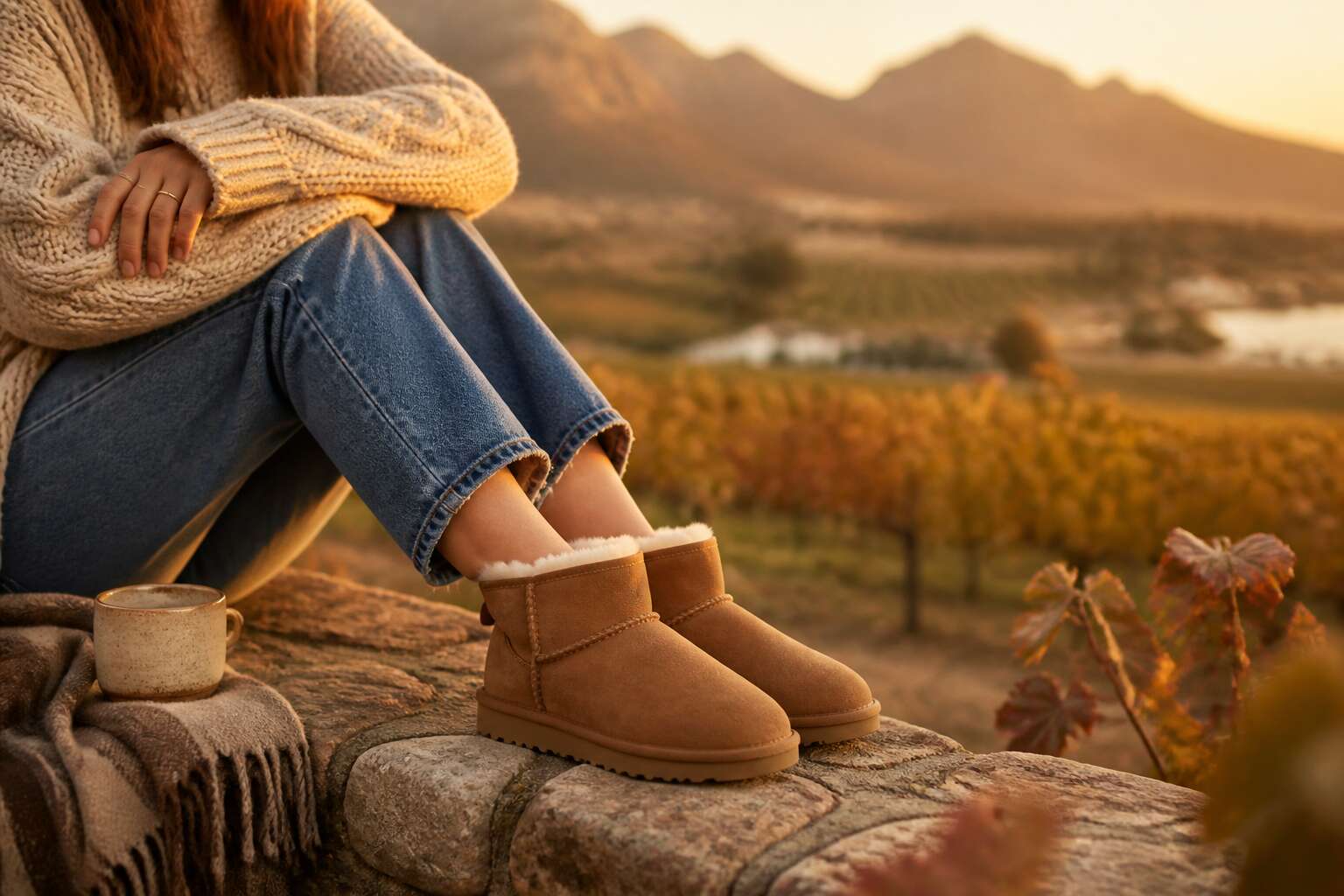
The Allure of Natural Sheepskin Footwear
Unique Thermal Properties for Variable Climates
South Africa’s climate shifts without warning, from coastal dampness to highveld frost. Sheepskin ankle boots South Africa respond with an almost eerie precision. The wool fibers trap air against your skin, but they do not simply insulate. They react to your own heat signature. On a cold morning, they hold warmth. By afternoon, when temperatures spike, the same fibers release excess heat before you feel the change.
This is not a gimmick. The natural crimp in each wool strand creates microscopic air pockets. These pockets regulate temperature continuously.
- Dry inland winters require steady insulation.
- Humid coastal summers demand breathability.
The boots manage both without effort, adapting to whatever the sky throws down.
Durability and Comfort Compared to Synthetic Materials
Synthetic materials look good in the store, but they rarely survive a full season of pavement, dust, and sudden rain. Sheepskin ankle boots South Africa endure because the leather flexes with the foot instead of cracking. The wool lining handles moisture in a way that man made fibres cannot replicate. It wicks sweat, dries quickly, and keeps its shape through years of daily wear.
Comfort is not a starting point. It is an outcome. When you slide your foot into natural sheepskin, the wool compresses around your contours within days. No synthetic foam or mesh can match that. The fibre structure resists odour, too. In my experience, a pair of sheepskin ankle boots South Africa outlasts several synthetic pairs, which makes the higher upfront cost easier to accept.
Look at how each material ages:
- Synthetics lose cushioning quickly and begin to smell.
- Natural wool retains resilience and stays fresh.
- Leather uppers develop character rather than peeling.
For anyone who values durability and comfort, the choice becomes obvious.
Why Ankle Height Is Ideal for Daily Wear
The ankle is where daily footwear proves its worth. Sheepskin ankle boots South Africa deliver a secure fit without the bulk of tall boots or the exposure of low-cut shoes. The shaft ends just above the joint, allowing full flexion while keeping the foot held in natural wool.
What makes this height so appealing for daily wear is the balance it strikes. You get the protective feel of a boot and the ease of a slip-on. No zips, no laces, no wrestling at the door.
Consider how these boots behave across a normal day:
- Quiet steps on tiled floors and gravel.
- No chafing around the calf during long commutes.
- Easy pairing with cropped trousers or long skirts.
The allure of natural sheepskin lies in its irregularity. Each hide carries subtle variations in texture and shade, so your pair never feels mass produced. That organic character, combined with the practical ankle cut, makes sheepskin ankle boots South Africa a genuine everyday staple.
The Role of Ethical Sourcing and Local Manufacturing
The allure of natural sheepskin isn’t in uniformity, it’s in the quiet character of each hide. Slip on a pair of sheepskin ankle boots South Africa and you’re wearing a living thing, tanned and shaped by skilled hands. The grain shows tiny creases. The wool’s density varies slightly from heel to toe. These are not flaws. They’re evidence of authenticity!
Ethical sourcing matters here. The best hides come from farms that treat animals with respect. Local manufacturing shortens the chain between pasture and product. Buying sheepskin ankle boots South Africa made close to home supports communities that depend on honest work. Consider what local production preserves:
- A shorter route from farm to workshop
- Time-honored tanning skills passed down through generations
- Traceability back to the origin
I’ve seen the workshops where this happens. Tanners who know their craft, stitchers who check each seam twice. Buying local means investing in that tradition.
Exploring Design Variations and Trends
Classic Suede and Leather Finishes
Classic suede finishes define the character of sheepskin ankle boots South Africa. The velvety nap catches light at each angle, offering a tactile richness that polished leather cannot replicate. Designers lean into earthy palettes, from camel to chestnut, echoing the Highveld’s muted tones.
Smooth leather presents the counterpoint. Its glossy surface carries a deliberate sheen, with espresso and oxblood lending urban sophistication. Some styles pair both materials, suede panels meeting leather trims. That contrast creates dimension without overwhelming.
I notice a movement towards tonal stitching and minimal branding. The current trends favour:
- milled nappa leather with a soft hand feel
- brushed suede in dusty blues and sage greens
- perforated leather for transition seasons
These finishes transform the boot into a personal statement. When purchasing sheepskin ankle boots South Africa, the outer texture influences every outfit pairing.
Fur-Trimmed and Decorative Details
Fur trimmed collars and decorative hardware turn a functional boot into a quiet indulgence. A flick of shearling at the ankle draws the eye without shouting. It frames the foot with warmth and texture, softening the transition from denim to boot. Designers often pair this trim with antique brass zippers or exposed stitching, small touches that reward a second glance.
The ornamental language extends to pulls, buckles and leather lacing. Each detail should earn its place. Excessive embellishment cheapens the silhouette, while a single well placed accent elevates it. When choosing sheepskin ankle boots South Africa, consider how these flourishes align with your wardrobe. A burnished zip pull adds personality. A fur cuff invites touch. The best decorative choices feel inevitable, as if the boot were always meant to carry them. For those who prefer subtlety, a matte hardware finish keeps the focus on the shearling itself, making sheepskin ankle boots South Africa feel both considered and alive.
Contemporary Colour Palettes for Local Tastes
South African light changes how colour reads on footwear. A boot that looks rich in a Cape Town storefront might flatten under Highveld sun. This is why contemporary sheepskin ankle boots South Africa favour nuanced shades over stark primaries. Terracotta echoes the Western Cape’s sandstone. Olive captures the bushveld’s quiet green. Caramel offers a neutral that flatters deeper skin tones.
Some ranges experiment with two-tone effects: a whisper of contrast at the heel cup, a slightly darker cuff. Others treat the hide with a subtle ombre wash. The result feels modern without losing the material’s inherent warmth.
A few palettes trending locally:
- Warm greige with a brown undertone
- Burnt orange and rust
- Tobacco and honeyed tan
These colours pair naturally with denim, khaki, and the muted linens common in South African wardrobes.
Functional Sole Options: Grip and Flexibility
The pavement outside a Melville café is a gauntlet of cracked slabs and stubborn curbs. A boot sole that cannot handle it will do the limping for you. The sole options on sheepskin ankle boots South Africa deserve as much attention as the hide.
In my experience, grip matters on wet tile and dusty gravel alike. Look for a rubber compound with a lug pattern that bites. Flexibility is the other half. A sole that bends with your foot feels broken in from day one, while a stiff sole will punish you by mid-afternoon!
What separates a capable sole from a decorative one:
- Tread that clears mud and pebbles
- A flexible shank for arch support
- Flex points at the ball of the foot
Boots that balance grip and give are rare. Find sheepskin ankle boots South Africa with the right sole, and your feet will thank you after three kilometres.
A Practical Buying Guide for Local Conditions
Correct Sizing and Fit with Natural Materials
Nothing betrays a hurried purchase like the first ache in your heel. With sheepskin ankle boots South Africa, I have learned that the fit is an agreement between your foot and a material that breathes and changes. Natural sheepskin stretches where needed and compresses where not, so a new pair should feel almost too snug!
Local conditions complicate this. The Highveld’s dry air keeps fleece springy, while coastal humidity makes it dense. For correct sizing, follow a simple ritual:
- Measure feet late in the day.
- Wear the socks you intend to use.
- Leave a thumb’s width for toes.
The heel should hold without slipping, and the instep should feel firm. Natural materials mould to your own architecture, but only if you start with an honest fit. True comfort arrives after weeks of wear.
Seasonal Considerations Across South African Provinces
The Karoo’s winter cold is unforgiving. When you shop for sheepskin ankle boots South Africa, the province dictates your needs. In Gauteng, the Highveld’s temperature swings call for a boot that releases heat quickly. The Western Cape’s damp winters demand a robust sole and water-resistant treatment. KwaZulu-Natal’s humidity asks for lighter fleece.
Consider your local season carefully. I purchase during autumn, when the first chill arrives. A simple checklist helps:
- Verify the fleece density. Denser for the Cape, springier for inland elevations.
- Check the sole’s tread depth against wet pavement or dusty paths.
- Ask about local warranties for stitching fatigue.
Above all, test the boot against your own province’s peculiar weather. The same pair that performs well in Durban’s moisture may fail in Bloemfontein’s dry air. Choose accordingly!
Sole Construction for Urban and Rural Terrain
Your sole is the only thing between your foot and Karoo gravel or Sandton’s slick paving. Get that wrong, and your sheepskin ankle boots South Africa become costly slippers. I discovered this after a rural detour.
Urban terrain prefers a dense, non-marking rubber compound with shallow traction bars. Rural paths need deeper lugs and a firm heel for loose soil. Check the shank as well; a stiff one protects your arch on uneven ground.
Before spending your rands, inspect these sole details:
- Press the tread. It should resist, not squish.
- Seek a reinforced heel counter for farm roads.
- Confirm the outsole is replaceable for future resoling.
That simple check keeps my feet dry from Durban’s streets to Mpumalanga’s tracks, proving sheepskin ankle boots South Africa demand terrain-specific construction.
Budgeting for Premium and Affordable Ranges
Setting a realistic budget for sheepskin ankle boots South Africa means weighing leather grade against your daily commute. Premium ranges often use double faced sheepskin and hand stitched welts, while affordable pairs still deliver decent warmth if you check the fleece density before buying.
From my own comparisons, the sweet spot sits between R1,200 and R2,500 for urban wear. Below that, you are trading longevity for immediate comfort. I have seen budget pairs fail within three months of Gauteng winters.
- Premium: R2,500 and up, with replaceable outsoles
- Mid range: R1,200 to R2,500, suited for daily pavement
- Budget: under R800, strictly for occasional indoor use
Spotting Authentic Sheepskin vs. Imitations
Spotting authentic sheepskin requires more than reading the tag. Genuine sheepskin ankle boots South Africa have a dense, fibrous base when you part the fleece. Imitations often show a knitted or mesh backing that imitates wool but lacks the leather surface. The smell separates them too; real sheepskin carries a subtle, earthy note, while synthetics have a plastic undertone.
Local climate complicates matters when you shop for sheepskin ankle boots South Africa. In coastal humidity, synthetic linings trap moisture against the skin, but authentic sheepskin wicks it away. On the Highveld, dry air causes cheap fibres to crack and lose shape within weeks.
Test these points before buying:
- Pinch the fleece: genuine fibres stay together, imitation strands slide apart.
- Press the outer surface: authentic leather dimples, synthetics spring back.
- Inspect the heel counter for stitching rather than glue.
Cleaning and Maintenance Essentials
Daily Care Routines to Preserve Appearance
Sheepskin ankle boots South Africa owners know that preservation is a quiet ritual. Daily care prevents deterioration before it begins. A soft brush removes surface dust after each wear. Do not wait for stains to settle, because ochre dirt from the Free State and the fine grit of the Cape Flats will embed themselves deep within the fibres.
Moisture does the deepest damage. Salt from coastal air leaves a pale bloom on the hide. If the boots become wet, dry them slowly away from heat sources. Highveld storms and Gauteng downpours make this discipline essential.
- Brush the exterior with a suede brush each evening
- Shake loose sand and debris from the interior
- Stuff the boots with newspaper to absorb overnight moisture
Never apply soap or abrasive cleaners near the seams. The stitching bears the structural load and harsh chemicals weaken that bond. Regular attention means a well-tended pair outlasts several cheap replacements.
Dealing with Rain, Dust, and Mud
Rain in Cape Town arrives without warning, and the clay of the Drakensberg trails coats the soles in heavy layers. For sheepskin ankle boots South Africa wearers, the real enemy is delay. Mud should dry completely, then break away with a blunt edge. Scraping wet mud pushes it deeper into the suede.
A damp cloth with white vinegar lifts stubborn grime from the surface. Follow with a clean cloth, then set the boots in a cool room. Heat from a fireplace or dryer will stiffen the leather and crack the hide.
- Brush dust away each evening before it embeds
- Dry wet boots slowly, stuffed with newspaper
- Apply a waterproofing spray before the rainy season
Karoo grit and Highveld dust share one trait: they abrade fibres over time. Regular brushing keeps the nap soft and the colour true.
Proper Storage to Extend Lifespan
Cleaning sheepskin ankle boots South Africa calls for a hand that understands the pelt’s natural lanolin. Harsh detergents strip that waxy protection, leaving fibres brittle and prone to cracking. A dry foam cleanser works well. The process involves rubbing it into the nap with circular motions, then wiping away residue with a damp sponge. An overnight rest on a wooden last allows the shape to settle.
Storage presents its own hazards. A hot, airless cupboard encourages mildew, while direct sunlight fades the colour. Cotton dust bags and cedar shoe trees work best. Cedar absorbs moisture without overdrying the hide. Folding the shafts down permanently creases the leather.
Sheepskin ankle boots South Africa also demand rotation. The same pair worn daily never gets time to rebound. Two pairs used alternately outlast three pairs worn consecutively.
Retail Options and Shopping Channels Nationwide
Specialty Leather and Sheepskin Boutiques
Most sheepskin ankle boots South Africa never reach a department store shelf. They move from local tanneries directly into specialty leather and sheepskin boutiques, where customers can examine the fleece, test the sole flex, and confirm the hide’s origin before parting with their money. These boutiques, found in Cape Town, Johannesburg, and Durban, operate on a personal scale that online retail cannot replicate. In my view, that scrutiny is worth the trip.
A visit to a serious boutique should include:
- Access to limited production batches that never reach online stores
- The chance to compare multiple pairs side by side
- Direct knowledge of the tannery and its sourcing practices
Nationwide shopping channels have grown, with established retailers and online marketplaces offering broader access to sheepskin ankle boots South Africa. Yet the boutique experience still leads the market. It offers certainty about the product’s provenance, which matters to buyers who plan to wear these boots daily.
Online Retailers with Local Delivery and Returns
Online shopping has reshaped how many South Africans buy sheepskin ankle boots South Africa. Established retailers now offer nationwide delivery with clear return policies, which removes much of the hesitation that comes with purchasing footwear without trying it on first.
Most reputable online stores provide:
- Free delivery to major centres like Johannesburg, Cape Town, and Durban
- A 7 to 14 day exchange window for sizing issues
- Detailed photographs showing the boots from multiple angles
These channels suit repeat buyers who already know their fit. First time shoppers still benefit from one in store visit, but the online route has become a dependable way to secure sheepskin ankle boots South Africa without travelling far.
Seasonal Sales and Clearance Events
The retail calendar for sheepskin ankle boots South Africa moves to its own rhythm. Many shoppers wait for the first cold snap in Gauteng or the Cape winter rains before committing to a new pair. This predictable surge in demand shapes when stores refresh their stock and when they clear out the previous season’s inventory.
Specialist footwear retailers in major malls tend to run their major promotions in late autumn and early spring. The timing is deliberate. Stores need to make room for summer sandals and lighter styles, which means premium sheepskin options often see meaningful price adjustments. Durban shoppers may find clearance events earlier than their Johannesburg counterparts, simply because warm weather lingers longer on the coast.
– Look for clearance events at the end of July and again in September
– Sign up for store newsletters to receive early notification of private sales
– Check factory shops in the Western Cape for discontinued colourways
The price difference between a full price and a marked down pair can be substantial when buying sheepskin ankle boots South Africa. A patient buyer who waits for the autumn clearances often secures the same quality construction at a more approachable price point. However, the most sought after sizes in neutral shades disappear quickly. The trick is to establish a relationship with a trustworthy retail assistant who can hold a pair or alert you to an upcoming sale. This human element remains valuable in an age of automated stock alerts.
Custom-Made and Artisan Suppliers
In the backstreets of Paarl, a third generation tanner still measures feet by hand. Nationwide retail options for sheepskin ankle boots South Africa include these intimate workshops alongside the familiar mall chains. Artisan suppliers work with local hides, stitching each pair to order. You select the sole, the fur density, the shaft height. The maker records your measurements on paper.
I have yet to find a mall display that matches the deliberation of a custom fitting. Ordering custom made sheepskin ankle boots South Africa follows a different timeline than mass production. You wait weeks, not minutes! The result fits with a precision that off the shelf pairs rarely match.
Three routes reveal this trade:
- Direct workshop visits in Cape Town and Johannesburg
- Craft markets in Stellenbosch
- Commissioned orders through leather guilds
The relationship continues beyond the sale. A workshop owner who knows your gait becomes someone you return to.
International Brands vs. Local Enterprises
International brands occupy the prime mall shelves. Their sheepskin ankle boots South Africa shoppers encounter in every major centre arrive with uniform styling and global pricing. Local enterprises answer with simpler economics: leather that never left the country and prices that reflect local overheads.
The choice depends on what you value. International brands deliver consistent sizing, generous return policies, and familiar marketing. Local workshops deliver hides suited to the climate, soles built for local pavement, and transactions that keep money inside the border.
When I shop for sheepskin ankle boots South Africa, I weigh these options:
– International brands: reliable sizing, worldwide warranty, premium price
– Local enterprises: regional fit, direct feedback, lower import costs
Both appear in malls, standalone stores, and factory shops. The difference shows in the details. Foreign pairs carry a brand tag. Local pairs carry a maker’s name.
Customer Reviews and After-Sales Support
Where you buy sheepskin ankle boots South Africa often determines the quality of service you receive. Department stores and mall chains offer the simplest transactions, but independent retailers frequently provide the most candid advice on fit and climate suitability.
Customer reviews carry genuine weight in this market. Shoppers in Johannesburg and Cape Town post detailed notes about sizing quirks and sole wear. A pair that runs half a size small from one workshop may fit perfectly from another. Reading recent reviews specific to your region matters more than any generic star rating.
After-sales support varies by channel:
- Mall retailers offer standard warranty exchanges for manufacturing faults
- Independent boutiques may re-last or re-sole boots purchased from them
- Online stores must honour the Consumer Protection Act for returns
Ask about sole repairs before you pay. In my experience, this question separates sellers who stand behind their work from those who simply move stock.

0 Comments