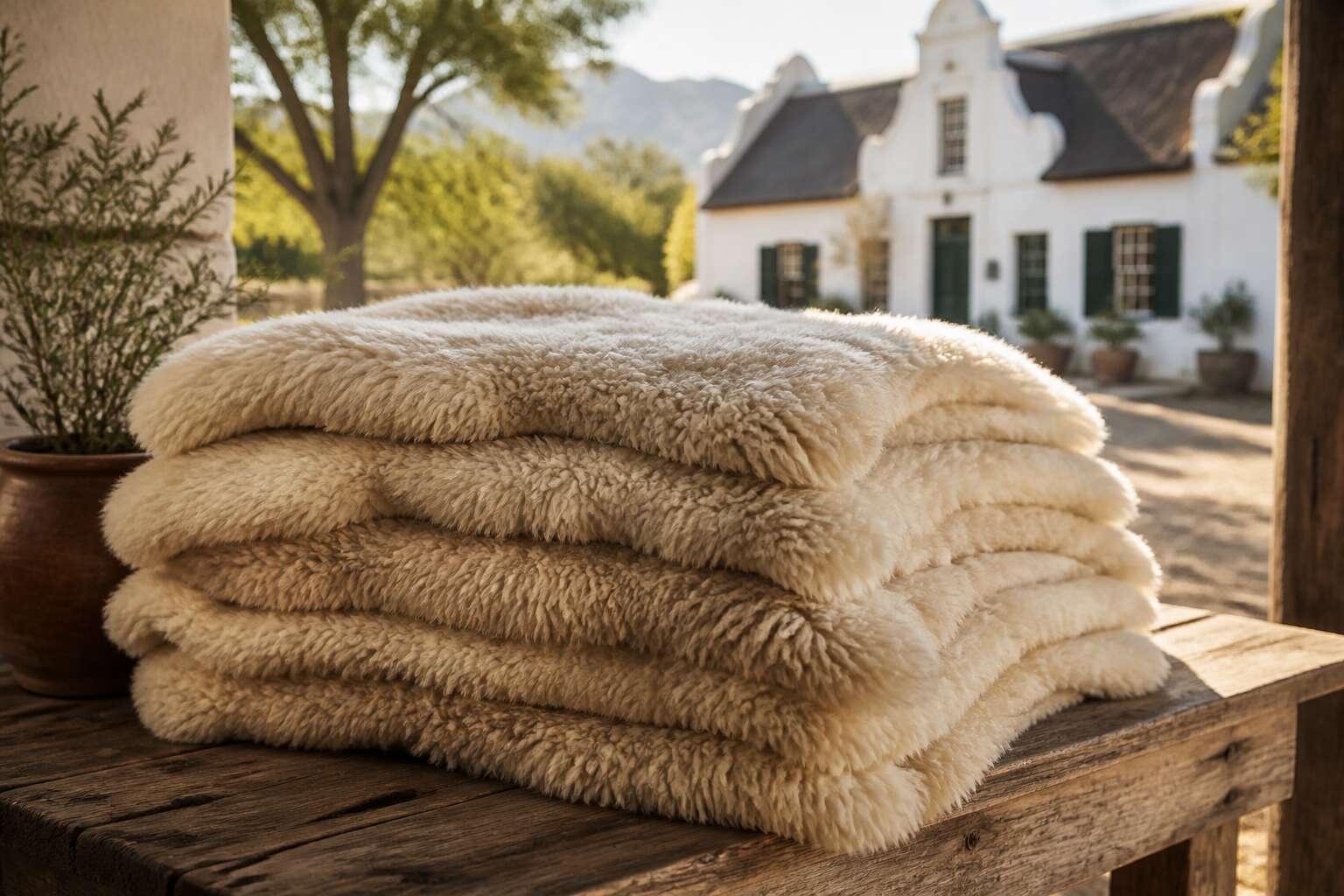
Exploring the Sheepskin Pelt Industry in the Western Cape
Distinctive Breeds and Raw Hide Characteristics
Merino or Dorper. That choice shapes every pelt that leaves the Western Cape! Merino fleece yields a dense, fine underwool that tanners prize for its plushness. Dorper hides offer a tougher grain with a shorter, coarser staple. These distinctions matter when sourcing wholesale sheepskin pelts Western Cape buyers rely on for consistent quality.
The Cape’s dry, Mediterranean summers affect wool growth, producing a drier lanolin profile. This influences the suppleness of the finished pelt. When I inspect raw hides at auction, I evaluate three touchpoints:
- Staple length uniformity across the shoulder and flank
- Absence of seed and burr contamination from veld grazing
- Grain integrity around the belly and leg seams
The interplay between breed genetics and veld conditions creates real variability. Northern Cape flocks often yield stronger, longer staples than coastal counterparts. Traders sourcing wholesale sheepskin pelts Western Cape recognise that this regional nuance shifts the hand feel of an entire batch.
Quality Grading Standards for Sheepskin Pelts
The scent of wet wool and lime hangs in the air, a familiar perfume for those who work the sorting tables. Grading is less a science and more a tactile conversation with the land itself. After the pelts are cured, the real scrutiny begins under the stark fluorescent lights of the warehouse.
The market for wholesale sheepskin pelts Western Cape relies on a shared understanding of what constitutes a premium product. We sort for density, not just length, because a sparse fleece loses its spring within a season. Uniformity across the entire pelt is the first gate, with a keen eye for the thinner patches that might emerge over the sheep’s ribs.
We run our hands over each hide. A top-grade pelt should feel like a solid block of velvet, the leather backing supple and white. The grading criteria for mature skins focus on a few specific points:
1. Overall fleece density and resistance to pulling when tugged.
2. Colour consistency, ensuring no yellowing or discolouration from poor storage.
3. The strength of the leather grain, which dictates how well it withstands the shearing process.
It’s a conversation between the buyer and the farmer, a silent negotiation based on the honesty of the skin. I have seen seasoned graders walk a whole consignment in ten minutes, their hands moving with a rhythm that discards the ordinary and elevates the exceptional. That instinct is what separates the novice from the expert, and it is the pulse of every deal for wholesale sheepskin pelts Western Cape.
The variance is often immense, even within a single farm’s delivery. For that reason, we find ourselves learning from the old Boer farmers who still grade by the feel of the suede, not the measured centimetres. Their wisdom, passed down through generations, is the real benchmark we measure our modern standards against. It brings a consistency to the trade that machinery simply cannot replicate.
Traditional and Modern Tanning Methods
There is a smell that separates the old tanneries from the new ones, and it is not a subtle difference. Traditional methods rely on vegetable tanning, a slow, patient process using bark and natural oils that takes months. It yields a pelt with a distinct, earthy aroma and a golden, warm hue. Modern facilities use chromium salts for speed and consistency, producing a softer, whiter leather that resists shrinking.
This shift in chemistry alters the very character of the fleece. A vegetable tanned hide feels firmer and holds its shape against heavy wear. The mechanised drums achieve a uniform finish that hides the subtle variations found in nature, but they also compress the fibres. For wholesale sheepskin pelts Western Cape, the choice often comes down to durability versus immediate softness.
Today, the best operations marry the two. They use modern drums for the initial soak but revert to natural fats for the final conditioning.
– Sustainable sourcing of wattle bark from local farms.
– Solar powered drying rooms that mimic the old wind-dried methods.
– Hand finishing on the suede side to retain the natural nap.
I prefer the hybrid approach myself. It requires more attention, but the resulting pelt carries a depth that rushed chemical baths simply cannot fake. That tactile honesty matters when buyers are sourcing wholesale sheepskin pelts Western Cape for export, where a single bad batch can ruin a reputation. The old ways teach patience, and the new ways teach precision; the best product needs both.
Environmental Certifications and Eco-Friendly Processing
The Karoo sun does most of the work, if you let it. A pelt that has hung in the open air for three weeks carries a weather history you can feel in your fingertips. That is what buyers are chasing now, not just softness, but a story they can verify. The industry has moved beyond simple claims of sustainability. For wholesale sheepskin pelts Western Cape, environmental integrity is now a measurable standard, demanded by international clients and audited at the source.
Certifications like the Leather Working Group (LWG) protocol have changed the conversation. These audits look at water usage, effluent treatment, and the very energy that powers the drums. A tannery that runs its machinery on a diesel generator cannot compete with one that banks on solar. The provenance of the hide itself matters as much as the processing. Traceability, from the farm gate to the shipping container, is the new currency. I have stood in sheds where every single pelt carries a barcode linking it back to a specific herd on a specific patch of land. That is accountability you can see.
The practical applications of this eco-conscious approach are specific and visible:
– Effluent ponds that use constructed wetlands for natural filtration before any water returns to the water table.
– Mechanical fleshing that recovers fat for use in soap and cosmetic production, leaving zero organic waste.
– A shift towards salt-free preservation, which reduces the chloride load on local soil and waterways.
These choices add cost and complexity, but they also build resilience. The land here is fragile, and the people who work it know that a poisoned stream ruins the flock for everyone. Local wattle, which is invasive but abundant, offers a sustainable bark source for tanning, and using it clears the veld. The final conditioning often relies on fish oils and plant waxes, leaving a natural breathability that synthetic resins would seal shut. For a wholesale sheepskin pelts Western Cape operation, this is not a marketing angle. It is the difference between a product that lasts a decade and one that finds its way to a landfill in a season. The environment, it turns out, is the harshest quality control officer the industry has ever faced.
Why the Western Cape Stands Out for Bulk Pelt Sourcing
Ideal Climate for Livestock and Fleece Quality
The Western Cape’s winter rains arrive with a persistence that shapes everything. Cold, damp air moves inland from the Atlantic, and sheep respond to this pressure. Their fleeces grow denser, the wool crimp tightens, and the pelt beneath develops a resilience that warmer regions cannot replicate. This is climate acting on biology, slow and deliberate.
For those who source wholesale sheepskin pelts Western Cape, the result is measurable. The cold forces a thicker undercoat, while moderate summers prevent the fleece from becoming brittle or sun-bleached. The landscape enforces this rhythm. Karoo scrub and coastal fynbos provide mineral-rich grazing that feeds the follicle at its root.
Consider what this means for bulk buyers:
– Higher wool density per square meter
– Stronger leather grain after tanning
– Consistent fiber depth across seasonal batches
These qualities emerge from the ground itself, and they persist through every stage of wholesale sheepskin pelts Western Cape supply chains.
Established Tanning Infrastructure and Skilled Artisans
Ask any seasoned hide trader where the real work happens, and they will point to the tanneries scattered across the Boland. This is where bulk buyers find an advantage that cannot be replicated! The region’s processing power rests on a dense network of facilities and artisans who have spent decades reading the grain of a pelt.
These craftspeople work with a tactile precision that machines cannot match. They assess each hide for tensile strength, feel the nap between their fingers, and adjust their approach based on the season’s yield. The infrastructure around them compounds this skill:
- Tanneries operating at volume for both domestic and export orders
- Artisans who spot subtle defects that automated scanners overlook
- Fresh pelts moving from farm to processing within 48 hours
For anyone sourcing wholesale sheepskin pelts Western Cape, this combination of human expertise and logistical ease translates into fewer rejected batches and more consistent output.
Proximity to Major Shipping Ports for Global Export
Cape Town’s harbour handles over a million tonnes of cargo annually, a figure that pulses with the rhythm of global trade. For those acquiring wholesale sheepskin pelts Western Cape, this shoreline is not merely a point of departure, it is the final act of a carefully choreographed journey. The tanneries of the region sit within a few hours’ drive of the docks, a proximity that keeps the supply chain taut and responsive. When a vessel’s schedule shifts or a buyer in Hamburg sends an urgent order, the distance between the warehouse floor and the ship’s hold shrinks to a matter of hours, not days.
This geographic advantage translates directly into the usability of the product. Extended transit times degrade the condition of tanned hides, leaving them stiff or prone to temperature damage. The Western Cape’s position shortens that vulnerable window, ensuring the pelts arrive with a supple, market-ready finish. Exporters benefit from consistent access to shipping lines that call on both the Atlantic and Indian Ocean routes, opening doors to European and Asian markets alike.
– Direct sailings to Rotterdam, Hamburg, and Antwerp on a weekly basis.
– Consolidation services for smaller bulk buyers to share container space.
– Cold-chain handling facilities that maintain optimal moisture levels.
The port’s infrastructure supports this trade with efficient customs clearance, minimising the time goods sit in bond. For a buyer, this means a reliable schedule and fewer surprises, a rare commodity in the world of natural materials. The sea is not a barrier here, it is a bridge that delivers the craft of the Boland to the world.
Cost Advantages of Buying Directly from Regional Producers
Bulk buyers picture the Western Cape as a pretty coastline with a harbour attached. The actual savings live inland, where tanneries operate a short distance from the farms. Raw hides skip long haul roads, and the price you see reflects that short chain instead of inflating to cover someone else’s fuel bill.
Ordering wholesale sheepskin pelts Western Cape straight from regional producers also removes the broker layer. No agent in Joburg taking a percentage for forwarding emails. No warehouse in Durban adding a handling fee for a product it never touched. You deal directly with the people who set the price, so negotiation stays honest and adjustments happen fast.
Bulk direct purchasing delivers:
- Volume pricing that rewards larger orders
- Fewer inland freight legs, so transport costs shrink
- Streamlined payment and invoicing without third-party fees
Rates negotiated directly also tend to stay stable for the season, even when wool prices wobble.
Innovation in Leather and Textile Manufacturing
The Western Cape has become a quiet laboratory for leather and textile process engineering. Local tanneries now experiment with enzyme assisted bating and low chromium re-tanning cycles that cut processing time without sacrificing tensile strength. For buyers seeking wholesale sheepskin pelts Western Cape, this means consistent output from a supply chain that refuses to stand still.
Consider what the region has already adopted:
- Automated grain inspection using spectral imaging to detect surface flaws before dyeing
- Closed loop water recycling systems that stabilise pH across production batches
- Digital fatliquor dosing that adjusts to each hide’s natural oil profile
These upgrades matter. A pelt that passes through a modern Western Cape tannery emerges with uniform thickness and predictable shrinkage, which simplifies cutting room planning for upholstery and garment manufacturers. The innovation stays functional, and it makes wholesale sheepskin pelts Western Cape a reliable input for industrial textile lines.
Critical Considerations for Volume Purchasing of Sheepskin Pelts
Assessing Hide Thickness, Wool Density, and Pelt Size
Every bulk order carries risk. One inconsistent fleece can devalue an entire shipment, so serious buyers scrutinize physical traits before purchasing wholesale sheepskin pelts Western Cape.
Hide thickness governs durability and weight. Thicker leather resists tearing but increases freight costs. Wool density reveals flock health. Dense underwool feels luxurious and insulates properly; patchy fleece points to neglect. Run your hand against the grain. The resistance tells you what paperwork cannot.
Pelt size determines your final yield. Compile your own metrics for volume purchases:
- Check the neck and belly regions for thin or brittle leather.
- Measure total surface area, not just length.
- Compare wool depth across multiple pelts.
Western Cape suppliers grade these factors inconsistently. Define your standards in writing before negotiating. When you source wholesale sheepskin pelts Western Cape, request sample batches and verify every dimension yourself.
Evaluating Wool Length, Texture, and Natural Color Variations
Wool length decides your customer’s experience before they touch the leather. Longer staples feel opulent but require careful shearing. Wholesale sheepskin pelts Western Cape often mix fleece lengths in one pallet. That inconsistency surfaces during packaging or customer complaints.
Texture carries its own warnings. Rub the bare leather and feel the grain; pinch the wool between fingers. A springy crimp indicates healthy growth. Brittle tips suggest seasonal stress. Ignore this and you accept rugs that shed.
Natural color variation adds another layer. Cream, ivory, and soft browns come from genetics, not dye. When buying wholesale sheepskin pelts Western Cape, matching shades across batches requires vigilance. Sun exposure during drying alters tones permanently.
Common warning signs on volume consignments include:
- Uneven staple length across a single pelt
- Wool that clumps or matts at the base
- Bleached patches that disguise yellowing
Understanding Chrome-Free and Eco-Tanned Options
When you buy wholesale sheepskin pelts Western Cape, the tanning chemistry determines your liability. Chrome-tanned pelts are durable and inexpensive, but they carry disposal restrictions and potential allergen concerns. Eco-tanned options, using vegetable or synthetic alternatives, appeal to premium markets and avoid heavy metal residues.
Volume buyers should verify the tanning process before committing to a pallet. I always ask for documentation on chrome content and wastewater treatment. Some tanneries offer blended lots, where chrome-free and conventional pelts are mixed, which complicates your inventory and marketing claims. That complication warrants close attention!
Consider the following when comparing suppliers:
- Chrome-free pelts often require different storage conditions
- Eco-tanned leather may have a firmer hand feel
- Dye uptake varies between tanning systems
For wholesale sheepskin pelts Western Cape, understanding these distinctions prevents costly returns and protects your brand’s reputation with eco-conscious customers.
Verifying Supplier Reliability and Production Capacity
There is a quiet vulnerability in a supply chain that rests on trust alone. When you commit to wholesale sheepskin pelts Western Cape, the tangible quality of a finished lot matters less than the unseen mechanics that brought it to your warehouse.
I have learned that a supplier’s true character emerges only under strain. A glossy brochure tells you nothing about how a tannery handles a delayed shipment or a defective batch. What matters is their response when the timeline collapses. Site visits are non-negotiable. Look for tanneries that welcome scrutiny of their floor and their ledger.
– Ask for a detailed production schedule that shows where your order sits in their queue.
– Verify their drying and finishing capacity during peak seasonal demand.
– Request references from buyers who have run multiple seasonal cycles, not just one-off purchases.
Production capacity is a lagging indicator of reliability. A facility may advertise high output, but volume means nothing if their machinery breaks down during the rainy months. When you source wholesale sheepskin pelts Western Cape, you are betting on their ability to repeat a process without deviation. I want to see their maintenance logs and their buffer stock of raw hides.
The psychology of this business is simple. You need a partner who feels the weight of your deadline as their own. Look for the supplier who calls you with bad news early, rather than presenting a surprise at the end. That early call is the mark of someone who understands accountability. Their communication pattern tells you more than any factory tour ever could. Building that discernment takes time, but it saves you from the quiet damage of a broken commitment.
Minimum Order Quantities and Flexible Bulk Pricing
Anyone who believes wholesale sheepskin pelts Western Cape operate on a first come, first served basis has never met a tannery’s sales director. Minimum order quantities exist to filter out tyre kickers, yet they also create room for negotiation. Bulk pricing follows a rhythm: larger commitments unlock better per unit rates, but the real savings appear when you commit to a seasonal schedule rather than a single order.
A supplier quotes a base price, then adjusts it for wool length, hide thickness, and finishing requirements. That flexibility matters when your product range shifts mid season.
- Ask for tiered pricing across three volume bands.
- Confirm whether the minimum order quantity applies per colour or per batch.
- Check if storage costs are included when you stagger delivery.
Volume purchasing is a negotiation, not a transaction.
Shipping, Packaging, and Storage Requirements
Shipping raw pelts requires deliberation. The wool fibre holds moisture, and trapped humidity causes mildew before customs clearance. For wholesale sheepskin pelts Western Cape, the journey demands breathable wrapping, not airtight plastic. I have seen excellent batches destroyed by polyethylene.
Stacking matters. Pelts should fold flesh to flesh, wool facing inward. Pallet loads need pressure distribution, because uneven weight creates permanent creases. Temperature fluctuations cause condensation, which damages the grain.
- Verify vapour permeable packaging.
- Confirm ventilation in the container.
- Ask about fumigation protocols, as regulations vary.
Storage after arrival is critical. Keep the space dry, around 50% relative humidity, with airflow between layers. Condensation forms when warm wool meets cold air, and that moisture has nowhere to go once the pelt is stacked. A wholesale sheepskin pelts Western Cape order can sit for weeks. Without spacing, the wool mattes and the skin stiffens, ruining the finish.
Where to Locate Trusted Pelt Suppliers in the Western Cape
Reputable Tanneries and Leather Processing Mills
Few regions match the Western Cape’s concentration of working tanneries. The industry clusters along the N1 corridor, with independent mills operating in Paarl, Wellington, and further afield in George. These are functional facilities where the scent of lime and cured hide is unmistakable. For buyers sourcing wholesale sheepskin pelts Western Cape producers offer direct access to the processing floor.
Reputable operations tend to share visible markers:
– Dedicated soaking and fleshing lines
– On-site dyeing and finishing equipment
– Clearly labelled raw material sourcing
– Documented waste disposal contracts
Leather processing mills in the region range from family-run operations to mid-size industrial plants. The most established suppliers allow full inspection of their production floor without hesitation. A tannery that guards its process often guards its quality issues. Wholesale sheepskin pelts Western Cape buyers find the strongest supply chains at mills that maintain direct relationships with local farms, shortening the distance from fleece to finished pelt.
Agricultural Cooperatives and Farming Networks
An estimated 65% of South African sheep farmers market their wool through cooperative structures. For buyers chasing wholesale sheepskin pelts Western Cape, these cooperatives provide an early window into pelt quality before the hides ever reach an auction.
Cooperative graders work closely with individual farms across the Robertson and Malmesbury areas. They track lambing cycles, nutrition plans, and wool density with unusual precision. A cooperative’s database often reveals which properties produce heavy, uniform pelts season after season. That information proves valuable when you need reliable bulk sourcing.
Typical benefits of working through farming networks:
- Access to pre auction sample batches
- Direct contact with shepherds managing small flocks
- Transparent pricing on raw wool and skins
Those connections cut out intermediaries and let you verify supply at the source.
Wholesale Marketplaces and B2B Platforms
Standing in the Epping industrial node, you can watch graders sort fresh hides from the morning truck deliveries. This is where wholesale sheepskin pelts Western Cape suppliers build their reputations, inspecting wool density and skin thickness on the spot. The Montague Gardens precinct also hosts several merchant warehouses open to serious bulk buyers.
Digital B2B platforms have simplified supplier discovery. Agriplace and the Western Cape Agro Trade Hub list independent pelt sellers with stock volumes, batch photographs, and export paperwork attached to each profile.
- Request batch samples before negotiating price
- Match supplier delivery schedules to your port loading dates
- Check trade references from other commercial buyers
The Cape Chamber of Commerce directory remains a reliable filter for legitimate wholesalers. Cross referencing online claims with a physical warehouse visit near the harbour precinct closes most supply chain gaps for wholesale sheepskin pelts Western Cape buyers.
Regional Trade Expos and Livestock Auctions
Trade expos in the Western Cape remain the arena where serious buyers separate themselves from the curious. I have walked those aisles and watched seasoned merchants handle pelts with the same reverence a winemaker gives a first vintage. These shows draw farmers, tanners, and intermediaries into one space where you can assess a supplier’s entire operation before any money changes hands.
A livestock auction offers a different kind of insight. The way a farmer presents their flock and the condition of animals as they move through the ring tells you volumes about the quality of their raw product. Many of the best wholesale sheepskin pelts Western Cape deals begin with a casual conversation after the hammer falls on a pen of merino ewes.
– Confirm the auction house’s health inspection protocols before buying
– Ask about the wool’s staple strength and whether the sheep were shorn recently
– Note which farmers consistently command premium prices for their lots
Regional events have a rhythm worth learning. Farmers arrive early, deals conclude quickly, and the most sought after pelt suppliers are often gone by midday. A buyer who shows up late to these gatherings leaves with lesser stock and invoices to match. The personal relationships built here translate directly into preferential access when supply tightens later in the season. This is where the quiet knowledge passes between hands that makes the difference between a standard purchase and one that elevates your entire product line.
Direct Sourcing from Sheep Farms
The most reliable path to wholesale sheepskin pelts Western Cape starts with a farm visit. A direct relationship cuts through every intermediary. You see the flock, the grazing conditions, and the shearing shed. You watch how the animals are handled. This matters.
A farmer with calm, well-cared-for sheep produces a cleaner pelt. Stress and poor nutrition show up in the wool and the hide. I have seen buyers drive three hours into the Karoo for a single conversation with a producer. That trip saves them from months of inconsistent deliveries.
When you visit a farm, you check the basics.
– Confirm the breed and the typical wool staple length for the season
– Ask about dipping schedules and parasite control, which affect hide quality
– Request a sample pelt from the last shearing to assess the grain and fibre
Building a network of three or four trusted farms gives you leverage. When the season turns and supply drops, your phone calls get answered first. You secure the better lots before they ever reach a market. That is how you establish a consistent line of wholesale sheepskin pelts Western Cape without the guesswork.
Verifying Business Credentials and Trade References
Most buyers skip the boring part. They inspect the wool, negotiate the price, and only later discover the supplier cannot deliver on time. A quick check of credentials saves months of frustration. When you evaluate a potential partner for wholesale sheepskin pelts Western Cape, request three documents:
- Export permits from the past two seasons
- Veterinary health certificates for the last six months
- Contact details for two existing bulk buyers
Then call those references. One phone conversation with a tannery in Paarl or a logistics manager in Cape Town tells you more than any brochure.
I also recommend visiting the physical premises. A cluttered warehouse with unlabeled bales suggests careless handling. Look for temperature controlled storage and clear batch documentation. These details separate reliable traders from middlemen who disappear when the season turns. The Western Cape has a small community of pelt specialists. Reputation travels fast here, so a supplier with three years of consistent trade references is worth more than one with a polished website and no history.
Diverse Commercial Uses for Bulk Sheepskin Pelts
Premium Furniture and Upholstery Applications
Beneath the Cape’s overcast skies, wholesale sheepskin pelts Western Cape anchor a quiet trade in luxury. Bulk buyers use these dense fleeces for premium furniture and upholstery, where each pelt serves as a seat of comfort.
- Chaise lounges wrapped in unshorn wool
- Executive chairs with padded hide seats
- Automotive interiors for bespoke vehicles
The natural lanolin repels spills, and the dense pile offers a tactile layer against the skin. My contacts in the region often mention pelts destined for high end ateliers, their creamy textures set into accent throws and headboards. These uses demand precision, but the result makes any room warmer and more comfortable, a relief from the Atlantic’s chill.
Fashion Apparel, Footwear, and Accessories
In the dark chambers of the Cape’s ateliers, the sheepskin pelt sheds its pastoral innocence for a macabre glamour. For those who deal in wholesale sheepskin pelts Western Cape, the fashion world is a hungry client. The fleece, still bearing the ghost of the animal, is cut into shapes both utilitarian and absurd. I have seen tanners handle these hides with a reverence reserved for relics, knowing their work will end up striding down rainy streets or draped over the shoulders of the melancholic.
The primary demand comes from footwear. The natural insulation of the wool makes it a guard against the damp cold that seeps from the pavement. Boots are lined with this dense pile, the lanolin creating a barrier against the wet. It is a strange comfort, walking on the remains of a creature that once braved the same storms.
– Gloves, cut with precision, offering a soft but resilient grip.
– Collars for heavy coats, standing stiff with unshorn wool.
– Bag linings, where the wool acts as a cushion for fragile cargo.
Garments themselves are often constructed from reversed pelts, the leather side out, showing the grain like a scar. These jackets are heavy, and they carry the weight of their origin. The artisans I speak with in the region are obsessed with the stitch, the seam, and how the hide moves. They are not making clothes; they are crafting second skins. For the buyer of bulk lots, the fashion industry provides a constant, grim hunger that the local farms are more than willing to satisfy. The wholesale sheepskin pelts Western Cape supply supports this cold-weather couture, where every piece feels like a protective shroud against the elements. My own shelves are lined with such samples, each one a quiet testament to the trade.
Medical, Therapeutic, and Comfort Products
Roughly one in four bedridden patients develops pressure ulcers, a statistic that drives steady demand for medical-grade sheepskin. Wholesale sheepskin pelts Western Cape suppliers serve hospitals and rehabilitation centres with wool that breathes, wicks moisture, and relieves pressure on fragile tissue. The wool’s natural lanolin also offers a mild antimicrobial barrier, which is why physicians and wound-care specialists trust it for long-term bedding.
Occupational therapists often request pelts for paediatric positioning. Chiropractors use them for cervical support pillows. Hospice caregivers value the fleece for its warmth and its ability to hold a patient comfortably through the night. The most common therapeutic orders include:
- Pressure-relief pads for operating tables and recovery wards
- Shearling heel protectors and elbow wraps for immobile patients
- Wheelchair seat cushions with foam backing for postural support
Buyers of wholesale sheepskin pelts Western Cape enjoy a steady segment here, one that values function over fashion and returns reliably every season.
Automotive Seat Covers and Interior Accents
Automotive buyers across South Africa now source wholesale sheepskin pelts Western Cape for seat covers that endure the country’s summer heat. The wool’s natural crimp traps air between driver and upholstery, while the hide’s friction keeps the cover anchored through sharp turns. This combination outperforms synthetic alternatives that degrade under UV exposure.
I’ve watched interior specialists order bulk pelts beyond seating. Headrests, door panels, and dashboards receive fleece trim that softens cabin acoustics and reduces vibration. The material’s moisture absorption prevents that sticky feeling common in leather cabins.
- Long haul truck seat overlays
- Family SUV rear bench covers
- Luxury sedan headliner accents
Suppliers deliver these orders pre trimmed, colour matched, and finished with edging that resists fraying under constant use.
Home Décor, Rugs, and Throws
According to local trade data, sheepskin pelts make up a third of premium rug materials sold in Cape Town. That demand drives suppliers offering wholesale sheepskin pelts Western Cape for home décor, rugs, and throws. The wool’s natural crimp creates a springy underfoot feel unmatched by synthetics. It also stabilises room temperature, keeping bedrooms cool in summer and warm in winter.
Bulk buyers of wholesale sheepskin pelts Western Cape choose longer fleece for lounge throws. These drape over sofas, adding a layer that absorbs sound. For floors, shorter, denser wool withstands foot traffic without matting. It really holds! Many designers pair undyed pelts with woven sisal or timber flooring to highlight natural texture.
I have seen homeowners order a dozen matching pelts for a guest bedroom. They spread them across the bed and beside it as a soft landing. The hide’s grip keeps them in place, even under children tumbling.
Strategies for Negotiating and Managing Bulk Pelt Orders
Requesting and Evaluating Physical Samples
Variability is the silent cost driver in bulk orders. A 20% difference in wool density between batches can shift your final product cost noticeably. When negotiating with suppliers of wholesale sheepskin pelts Western Cape, volume alone won’t secure the best rate. You must anchor your price to specific grading metrics. Establish a baseline for thickness and staple length before discussing per-unit costs, not after.
Managing the order requires a strict protocol. Do not rely on a single sample from the top of the pile. Ask for a random selection from different production runs. This reveals the true consistency of the tannery’s output.
1. Request samples from the start, middle, and end of a production cycle.
2. Measure the actual thickness, not just the advertised weight.
3. Check the leather suede side for residual grease or chemical odor.
This method prevents disputes later. It is easier to adjust a price before shipping than to argue about quality after delivery. A specific, verified sample set saves money and protects your reputation.
Leveraging Volume Discounts and Long-Term Contracts
Volume discounts only work if you negotiate the right terms. In the wholesale sheepskin pelts Western Cape market, a larger order can lower your per-unit cost, but only when the supplier trusts you to repeat that volume. Locking in a long-term contract changes the dynamic. You move from being a one-off buyer to a partner.
Here is the approach that works:
– Commit to a minimum annual volume across multiple shipments.
– Tie price increases to a published raw material index.
– Agree on a quality arbitration process before signing.
This structure protects both sides. Suppliers will offer better rates for predictable demand. Your business avoids sudden cost shocks. The negotiation becomes about building a reliable supply chain, not squeezing the last rand.
Custom Processing, Dyeing, and Finishing Options
Negotiating bulk pelt orders goes beyond price per unit. When you source wholesale sheepskin pelts Western Cape, clarify custom processing capabilities before finalizing contracts. Tannery production schedules shift quickly, and dyeing slots fill months ahead.
Managing these orders requires knowing which finishing options matter for your market. Some buyers need a specific texture or sheen. Others want flame retardant backing. The most common custom requests include:
- Custom dye matching to Pantone or fabric swatches
- Softness or firmness adjustments through re-tanning
- Surface treatments like embossing or shearing
Finishing choices affect both cost and lead time. A small batch of natural pelts may take two weeks, while a fully dyed and finished order can take six. I always build buffer time into the schedule and ask for production milestones in writing!
Aligning Delivery Schedules and Lead Times
Negotiating bulk orders for wholesale sheepskin pelts Western Cape requires a mindset shift. You are not just buying hides, you are reserving production capacity. The tannery’s schedule dictates your reality more than your sales forecast does. I learned this the hard way when a promised four week delivery turned into eight, and my client’s furniture line sat idle.
To avoid that headache, I always lock down a clear production timeline before signing anything. Ask the supplier to confirm their current workload and quote lead times in writing. This simple step prevents most misunderstandings.
Here is what I request from every supplier before placing an order:
– A detailed schedule with specific milestones for tanning, dyeing, and finishing
– Confirmation of how many production slots are available for your required timeframe
– A written policy on how delays are communicated and what remedies exist
– A clear statement on whether the price quote includes storage costs if delivery is staggered
Leaving some leeway in your delivery dates is also smart. A natural pelt order might ship quickly, but a custom dyed batch can stall at the finishing stage. I build at least two weeks of buffer into my internal deadlines. This extra time costs nothing but saves a lot of stress.
You should also confirm whether the supplier can stagger deliveries across multiple shipments. This flexibility lets you manage cash flow without paying for a full warehouse at once. Some tanneries allow this at no extra charge, while others quote a separate logistics fee. Knowing this upfront prevents a nasty surprise on your final invoice.
Most importantly, schedule a check in call at each production milestone. A quick status update on your wholesale sheepskin pelts Western Cape order is far cheaper than flying down to sort out a miscommunication. The suppliers appreciate the attention, and you get peace of mind. That simple habit has saved me from more than one logistical disaster, and it will serve you well too.
Establishing Clear Return, Warranty, and Dispute Policies
A return policy for bulk hides is not a formality. It is your safety net when a batch arrives with defects that only surface after unpacking. For wholesale sheepskin pelts Western Cape, I ask every supplier to put their warranty terms in writing before payment.
Key points I verify:
– How long do I have to report damaged or substandard pelts?
– Do they cover dye lot mismatches or only structural flaws?
– What evidence do they require, such as photos or third party inspection?
Dispute resolution matters too. Some tanneries offer mediation clauses. Others require arbitration. I prefer suppliers who provide a clear escalation path. A signed agreement with these terms protects both sides. It transforms a potential conflict into a manageable process. That clarity is worth more than a discounted price.




0 Comments